Energy and Electricity Vocabulary for Kids
Energy is the ability to cause change, while electricity describes effects caused by electric charge. Energy and Electricity Words for Kids: Vocabulary and Activities gives children practical language for sources, circuits, movement, light, sound, and heat. A child might begin with “The lamp needs electricity” and later explain, “Electrical energy changes into light and heat.” Start with visible objects and actions, then introduce current and renewable energy. The goal is confident speech, not memorised definitions. Children should name observations, sort related words, ask questions, and describe an energy change.
📥 Energy and Electricity Vocabulary Practice
Learn key words, compare ideas, and use them in everyday situations
Leave your email — we'll send the PDF to your inbox.No spam — the PDF plus one short reminder. Unsubscribe anytime.
Core Words and Useful Contrasts
Begin with nouns such as energy, electricity, battery, plug, socket, switch, wire, cable, circuit, bulb, lamp, motor, fan, heat, light, sound, movement, fuel, and power. Add verbs such as charge, connect, flow, store, produce, transfer, switch on, and switch off.
Use Energy and Electricity Words for Kids: Vocabulary and Activities as a speaking bank, not a spelling list. Younger children can practise concrete words such as battery, light, and switch. Older learners can add voltage, current, generator, solar panel, turbine, fossil fuel, efficiency, and energy transfer.
Examples in Everyday Contexts
Sentence frames turn labels into explanations: “The ___ is a source of energy,” “The ___ changes electrical energy into ___,” and “The circuit works because ___.” Examples include “The battery stores chemical energy,” “The speaker changes electrical energy into sound,” and “The solar panel changes light energy into electrical energy.”
Follow each statement with a question: “What is the energy source?”, “What change can you see or hear?”, or “Why did the bulb go out?” A child can answer with one word at first. Later, request a full cause-and-effect sentence: “The bulb went out because the circuit was open.”
In multilingual families, connect the idea across languages before checking the English label. A child may understand a battery without knowing the word circuit. Energy and Electricity Words for Kids: Vocabulary and Activities should build on existing knowledge instead of treating a missing English word as a missing concept.
How to Introduce the Vocabulary
Teach a connected group first: light, heat, battery, switch, wire, and circuit. Show a safe object or picture, say the word, and use it in a sentence. Let your child point, choose, or act before requesting spoken recall. This separates recognition from speaking.
Next, organise words by function. Sources include batteries, sunlight, wind, water, and fuel. Circuit parts include a cell, wire, switch, motor, and bulb. Outputs include light, heat, sound, and movement. Sorting places each word within a system instead of teaching isolated facts.
Include safety language: socket, damaged cable, warning sign, adult help, and do not touch. Children must never put objects into a socket, open an appliance, or handle a damaged cord. Use pictures, unplugged objects, or a child-safe low-voltage kit under adult supervision, following its instructions.
Activities for Different Ages
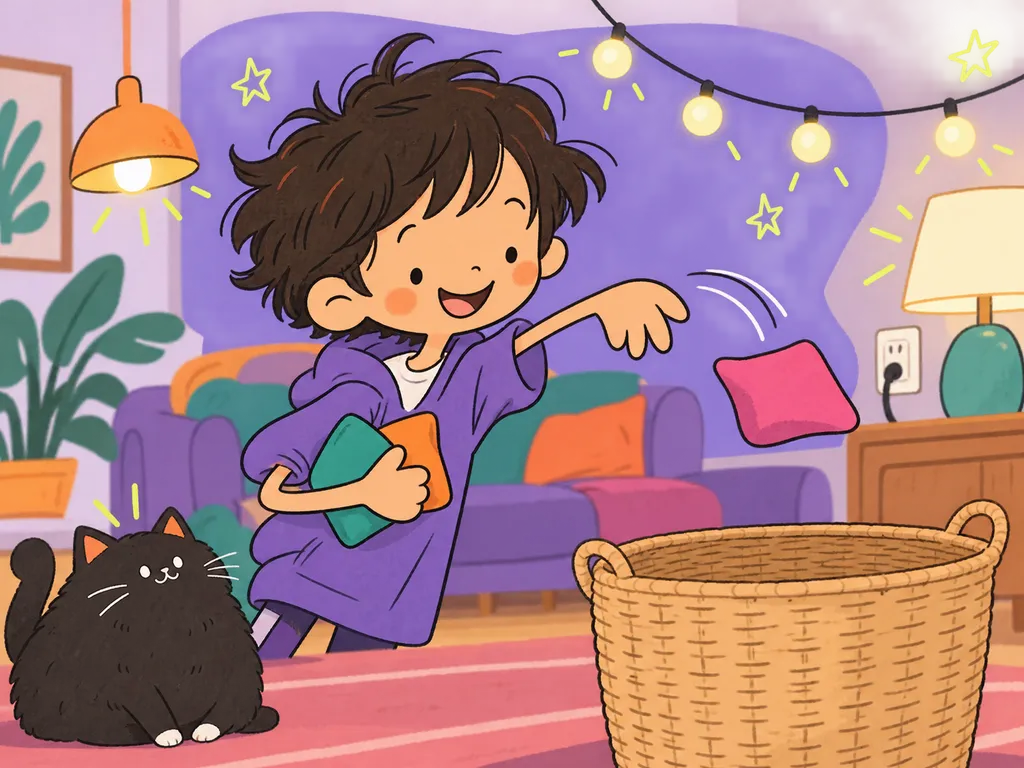
School-age Kids: Energy Action Hunt
Choose a room and find light, sound, heat, and movement. Your child points to an object and completes a frame such as “The lamp makes light” or “The fan moves air.” Add gestures: rub hands for heat, spin arms for movement, and cup an ear for sound. Focus on meaning and speech.
School-age Kids: Circuit Detective
Draw or print cards showing a battery, wires, a switch, and a bulb. Your child arranges them into a complete path, then removes one card to create an open circuit. Ask for an explanation using because: “The bulb will not light because the circuit has a gap.” A supervised low-voltage learning kit adds hands-on practice.
School-age Kids: Energy Transfer Map
Select familiar items and write an input-to-output chain for each. A torch becomes chemical energy → electrical energy → light and heat. A speaker gives electrical energy → sound and heat. Older learners can compare renewable sources, identify unwanted outputs such as waste heat, and explain their choices.
Practice Routines and Common Mistakes
Practise Energy and Electricity Words for Kids: Vocabulary and Activities in short cycles. On one day, sort picture cards. On another, finish sentence frames. Later, cover the labels and recall them from a diagram. Revisiting words through speaking, reading, and drawing works better than repeatedly copying each term.
Three-clue Challenge
Choose a word without saying it. Give three clues: its group, job, and an example. For battery, a child might say, “It is an energy source. It stores chemical energy. A torch can use it.” The listener names the word and creates a new sentence.
Correct meaning before grammar. Energy and electricity are related but not interchangeable: a moving bicycle has energy without using electricity. Power is the rate at which energy is transferred, not a synonym for energy. Model natural phrases: “The battery has run down,” “The lamp uses electricity,” and “The switch opens the circuit.” If a child says “electric energy,” model the school term “electrical energy” without interrupting the explanation.
- Try three energy word cards daily with children aged six to eight.
- Practice sorting five electricity words into safe and unsafe household examples.
- Use one science picture book to review circuits before bedtime twice weekly.
- Correct confusing terms by drawing simple arrows between batteries, wires, and bulbs.
- Repeat each new word in two spoken sentences without memorizing isolated definitions.
When a word has several meanings or pronunciations, Cambridge Dictionary is a useful check before turning it into child-friendly examples.
Frequently Asked Questions
How Many Energy Words Should a Child Learn at Once?
Start with six to eight connected words: energy, electricity, battery, wire, switch, circuit, light, and heat. Younger children may practise only three or four in one activity, while older learners can handle a wider group. Add terms when your child recognises the current words and uses several of them in short explanations.
Can Multilingual Children Learn These Words in More than One Language?
Yes. Connect each object or scientific idea across the languages used at home and school. Name a battery in each language, then practise one English sentence about its function. Switching languages does not erase the concept. Direct links between meanings help your child select the English word when needed.
Are Hands-on Electricity Activities Safe at Home?
Use only equipment designed for children, such as a low-voltage circuit kit, with close adult supervision. Follow the maker’s age guidance and instructions. Wall sockets, mains plugs, damaged cables, opened appliances, and loose household wiring are not learning materials. Paper diagrams or card activities teach circuit language without live electrical parts.
How Can My Child Remember Energy and Electricity Vocabulary?
Use Energy and Electricity Words for Kids: Vocabulary and Activities in several short tasks during the week. Ask your child to sort words, label a drawing, explain an appliance, and solve a clue. Reuse sentence frames until fluent, then change one part. Regular recall in meaningful contexts builds stronger access than rereading the same list.
A short one-to-one lesson can show what level and pace fit your child — book a trial English lesson.
Stay updated on our latest tips and resources by following us on Instagram LearnLink.